Spécifications techniques
[Texte disponible uniquement en anglais] Year: 1999
Medium: Macromedia Shockwave Flash (FLxER), Macromedia Director (Pixel Orchestra)
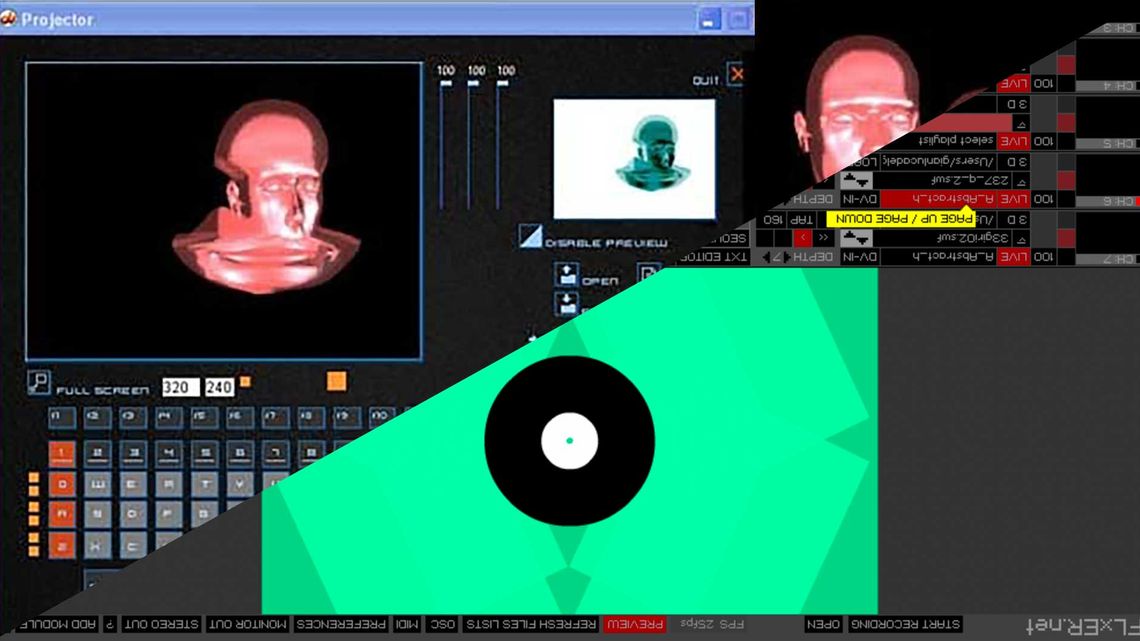
Pixel Orchestra vs FLxER is an interactive installation that brings together two software tools created during the early period of digital VJing: Pixel Orchestra, developed in Macromedia Director, and FLxER, created in Macromedia Flash. Two different instruments, born during the same historical period to address the same need: transforming the computer into a performative tool capable of composing, manipulating and combining images live.
The comparison between the two software systems also reflects two different cultures of the digital image, which can be summarised through the opposition pixel vs vector. Pixel Orchestra emerged from the Director environment, strongly connected to the management and composition of raster images and multimedia content; FLxER was instead developed in Flash, a platform built around vector graphics and the possibility of animating and transforming forms in real time. This is not an absolute distinction — both systems can work with different types of content — but rather two different technological foundations that deeply influenced the way each instrument was conceived and used.
The installation allows visitors to use both software systems directly. Rather than simply observing documentation of technologies that have now become historical, the audience can engage with their interfaces, understand their different logics and experience first-hand how a VJ could construct and manipulate images during a live performance.
Director and Flash represent not only two different technologies, but two production environments that helped define the aesthetics and possibilities of digital creativity between the late 1990s and early 2000s. Pixel on one side, vector on the other; on both sides, the same need to build new instruments for playing images live. At a time when dedicated VJing software was still in its infancy, designing an instrument and developing an artistic language through that same instrument were closely interconnected processes.
Pixel Orchestra vs FLxER therefore proposes a form of active digital archaeology. The two software systems are not exhibited as artefacts, but placed back into the hands of the audience. More than twenty years later, they return to what they were originally designed to be: instruments to use, explore and perform.